
Three Pillars: The Power of Incentives, Opportunities, and Support
03.11.2026
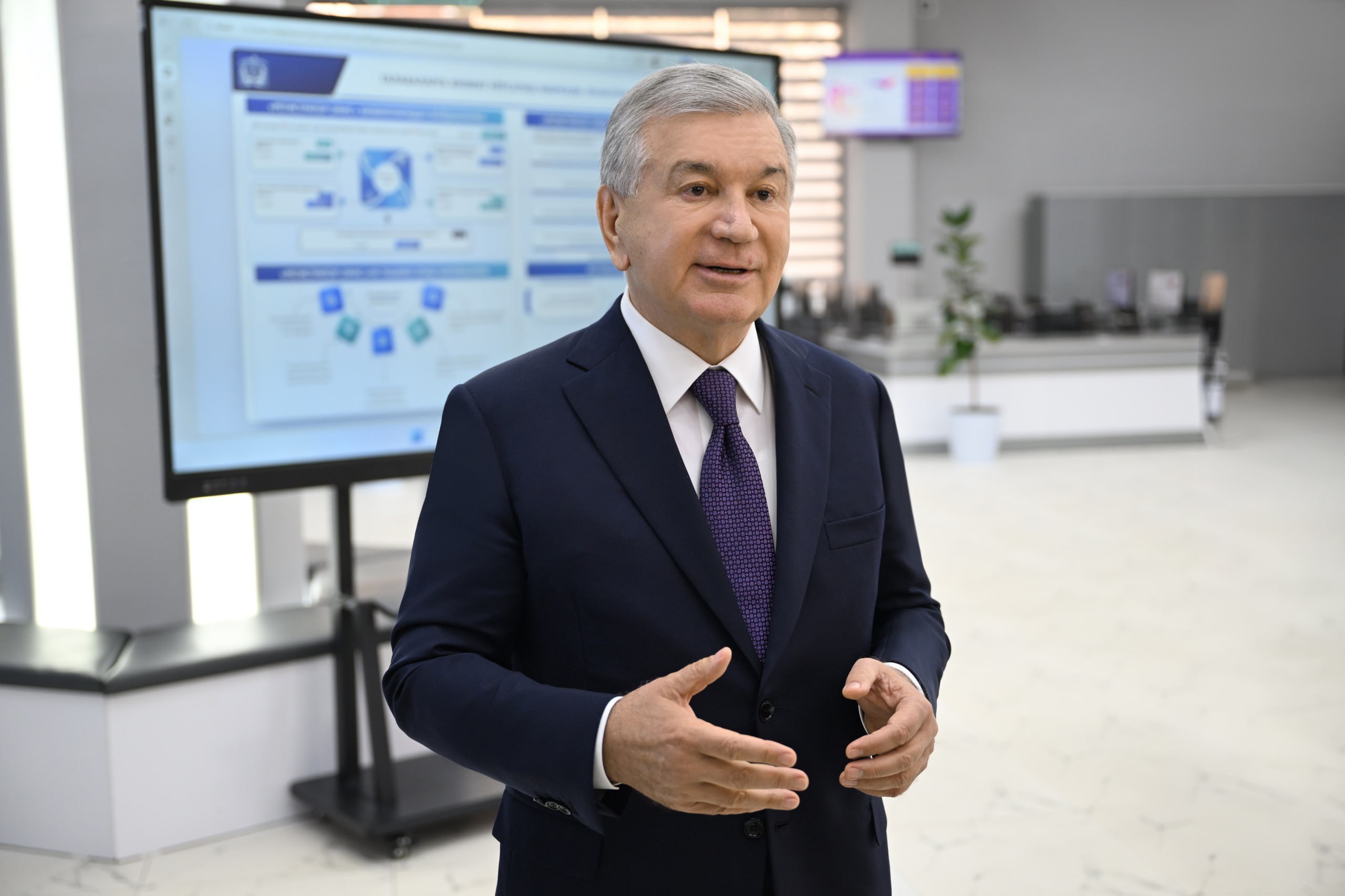
At a meeting devoted to discussing the socio-economic development of Kashkadarya Region, President Shavkat Mirziyoyev put forward the principle of “Incentives for knowledge, opportunities for work, and support for initiative.”
At first glance, this statement may appear to be a directive related to economic policy. In reality, however, it encompasses the entire chain of educational development — learning, working, and creating — and presents each component as part of an integrated system in which every element complements the others.
Incentives for Knowledge: Motivation to Learn
The effectiveness of education largely depends on learners’ intrinsic interest. This interest, in turn, is shaped by society’s attitude toward knowledge. When young people see that acquiring modern professional skills, learning foreign languages, and gaining in-depth knowledge are reliable investments in their future, their motivation to study increases.
Incentives can be both material (grants, scholarships, and preferential loans) and non-material (recognition, prestige, and opportunities for professional growth).
From a pedagogical perspective, this is the process of transforming external motivation into internal motivation. A student who feels encouraged begins to acquire knowledge not merely for examinations, but for life. The role of the teacher is particularly important in this process. Their pedagogical skills, communication culture, and ability to correctly understand learners’ thoughts (hermeneutic competence) help develop a sense of confidence in young people — the belief that “I can do it.” Incentives produce meaningful results only when they are built upon this confidence.
Government policy aimed at supporting young people represents a practical expression of this approach. During the President’s meeting with young people on February 24, 2026, it was emphasized that Uzbekistan has more than 22 million young people, representing enormous economic, social, and political potential that must be developed.
It was also noted that, thanks to the opportunities created, young people from Uzbekistan have won 66 gold, 147 silver, and 221 bronze medals at international science Olympiads. Furthermore, 63 startup projects have entered the markets of the United States, South Korea, the United Kingdom, and the United Arab Emirates.
These figures demonstrate the results that can be achieved when incentives and opportunities work together.
Opportunities for Work: The Practical Value of Knowledge
Knowledge loses its value if it is not applied in practice. Creating decent conditions and employment opportunities for every citizen who wishes to work honestly and productively has two important effects on the education system.
First, it narrows the gap between obtaining a diploma and securing employment, giving education a clear practical purpose.
Second, it encourages educational institutions to establish closer partnerships with employers. Internships, dual education, and integration with production processes are all natural outcomes of this approach.
The example of Kashkadarya Region illustrates this particularly clearly. At a meeting held on March 10, 2026, targets were established to reduce unemployment in the region to 3.2 percent and poverty to 3 percent during 2026.
It was also announced that plans were being developed to send 3,000 young people to Germany for employment in 2026 and 5,000 in 2027, while providing them with the necessary training. To support this initiative, an Education and Technology Center is planned to be established in the city of Karshi.
Thus, opportunities begin with education: young people are taught professional skills and foreign languages, after which pathways to employment are opened to them.
This principle is particularly relevant to engineering and technical education. At the meeting, it was noted that one of the most pressing challenges facing the region is water supply. Specialists trained in irrigation, water management, and agricultural mechanization are precisely the professionals needed to address these problems.
For such specialists, education linked to production processes and opportunities to participate in real-world projects are essential conditions for developing professional competence.
Support for Initiative: Opening the Way to Creativity and Innovation
The third pillar represents the highest stage: creativity and innovation.
When knowledgeable and hardworking individuals come forward with their own ideas, they must receive financial and organizational support from local authorities and banks. Otherwise, even the best ideas may remain nothing more than concepts on paper.
This principle creates opportunities in education for startups, innovative projects, and the commercialization of scientific research.
At one of the meetings devoted to Kashkadarya Region, the President endorsed an entrepreneur's initiative in Kitab District to establish an IT cluster and a university. This is a practical example of the principle in action.
When students and young researchers realize that their work and research can be transformed into viable business projects, they begin to view education as a creative process and approach their knowledge with greater responsibility.
Why These Three Pillars?
The strength of these three principles lies not in their individual application, but in their combined effect.
Without incentives, the pursuit of knowledge weakens. Without opportunities, knowledge remains unused. Without support, initiative fades away.
Incentives open the way to learning, opportunities lead to employment, and support makes creativity and innovation possible. Each of the three pillars reinforces the others.
This logic corresponds closely to the key stages of pedagogical development: motivation, practical activity, and creative growth.
The Impact on Educational Development
First, this approach introduces a new benchmark for assessing the quality of education: whether graduates can find employment and establish their own businesses.
Second, it transforms the role of the teacher. A modern educator is no longer simply a provider of knowledge, but also a mentor who guides learners and supports their initiatives.
Third, it encourages higher education institutions to cooperate with employers, banks, and local authorities, thereby establishing an integrated chain of “education — production — finance.”
In conclusion, the system of “incentives — opportunities — support” elevates education to the level of a driving force behind societal development.
Putting this principle into practice depends on cooperation among the government, educational institutions, entrepreneurs, and families.
If each of us, within our respective roles, can provide encouragement to students, opportunities to workers, and support to those who take initiative, this vision can be fully realized in practice.
Rakhimboy Jumaniyozov
Doctor of Pedagogical Sciences, Professor at the “TIIAME” National Research University Member of the Enlightenment Advocates Society.