
Activities being carried out in Tashkent region in accordance with the “Roadmap” to ensure the implementation of Resolution No. PD-122 of the President of the Republic of Uzbekistan, dated April 2, 2026.
26.04.2026
Tashkent Region
As part of the implementation of Resolution No. PD-122 of the President of the Republic of Uzbekistan, dated April 2, 2026, discussions were held in accordance with the “Roadmap” in Tashkent region.
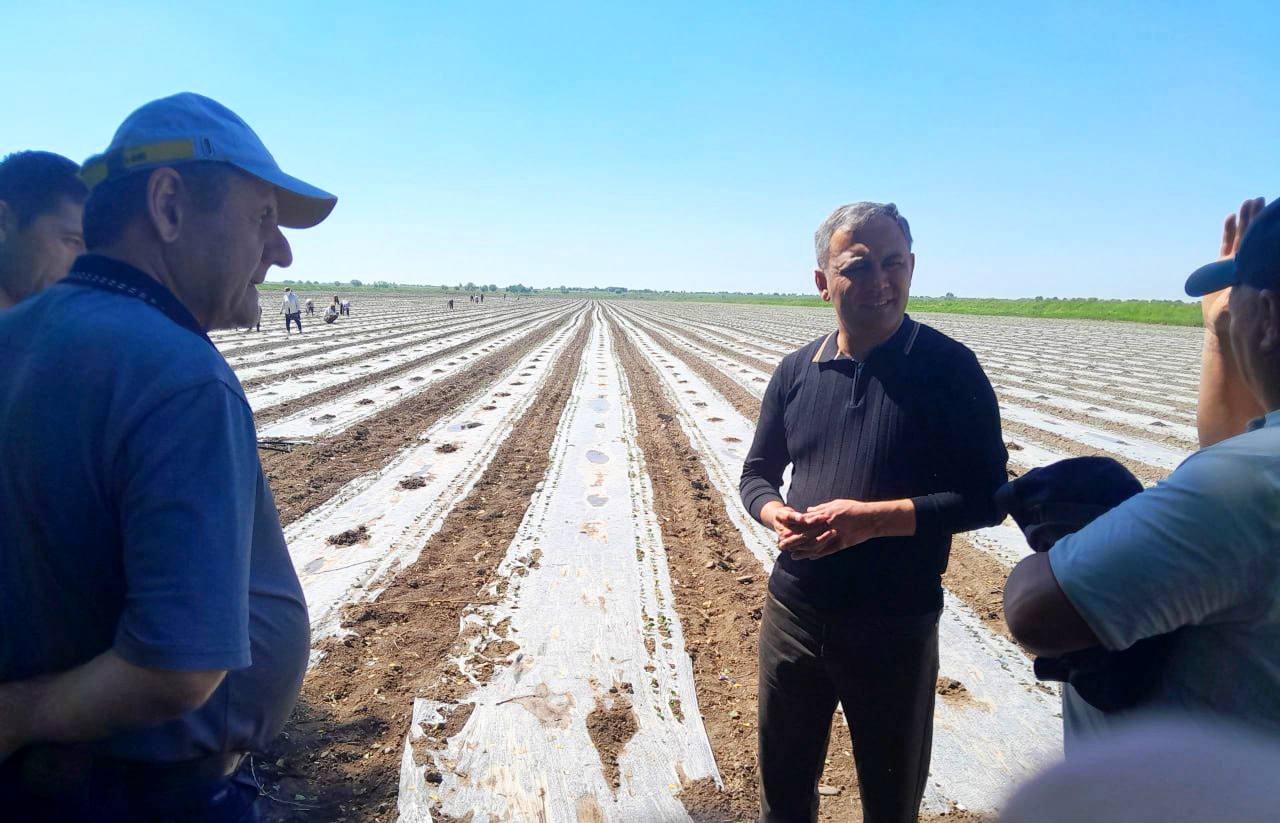
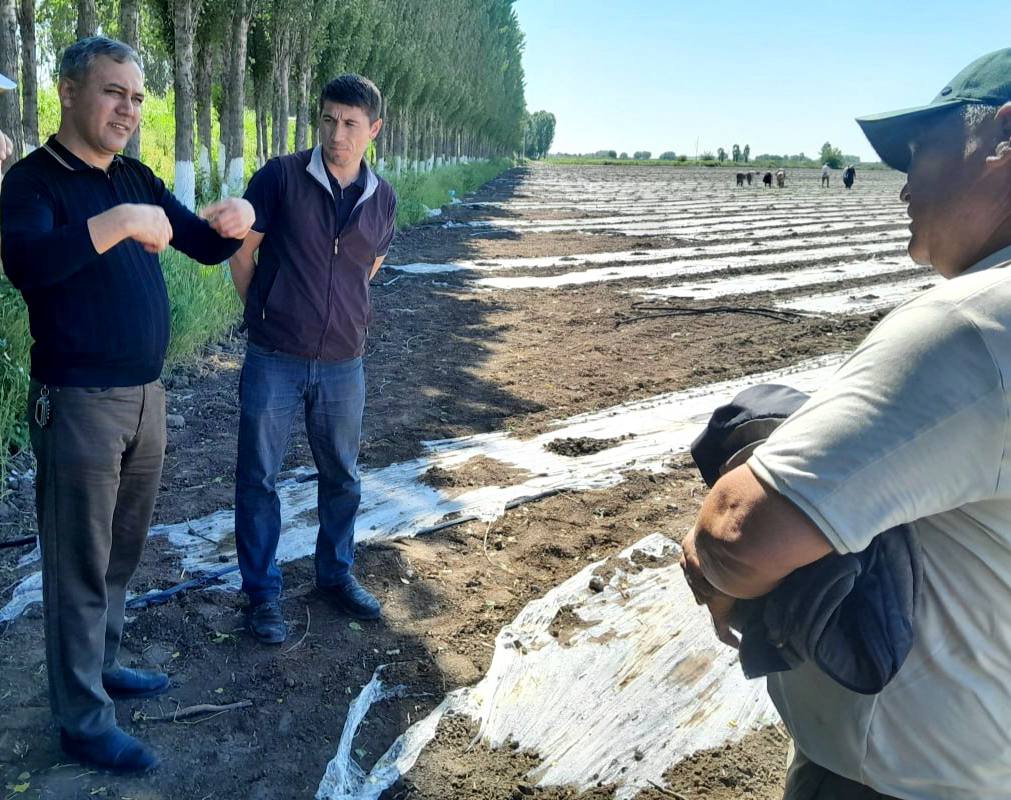
During the discussions, Head of the Chirchik–Ohangaron Basin Irrigation Systems Administration B. Kurbonov, representative of the Ministry of Water Resources for Tashkent region T. Kayumov, scientific advisor to the Governor of Tashkent region on agriculture and water management issues and Associate Professor, Doctor of Technical Sciences at "TIIAME" National Research University L. Samiyev, Head of Laboratory at the Research Institute of Irrigation and Water Problems O. Jovliyev, as well as responsible officials and specialists in the water management sector, reviewed mechanisms for implementing the assigned tasks.
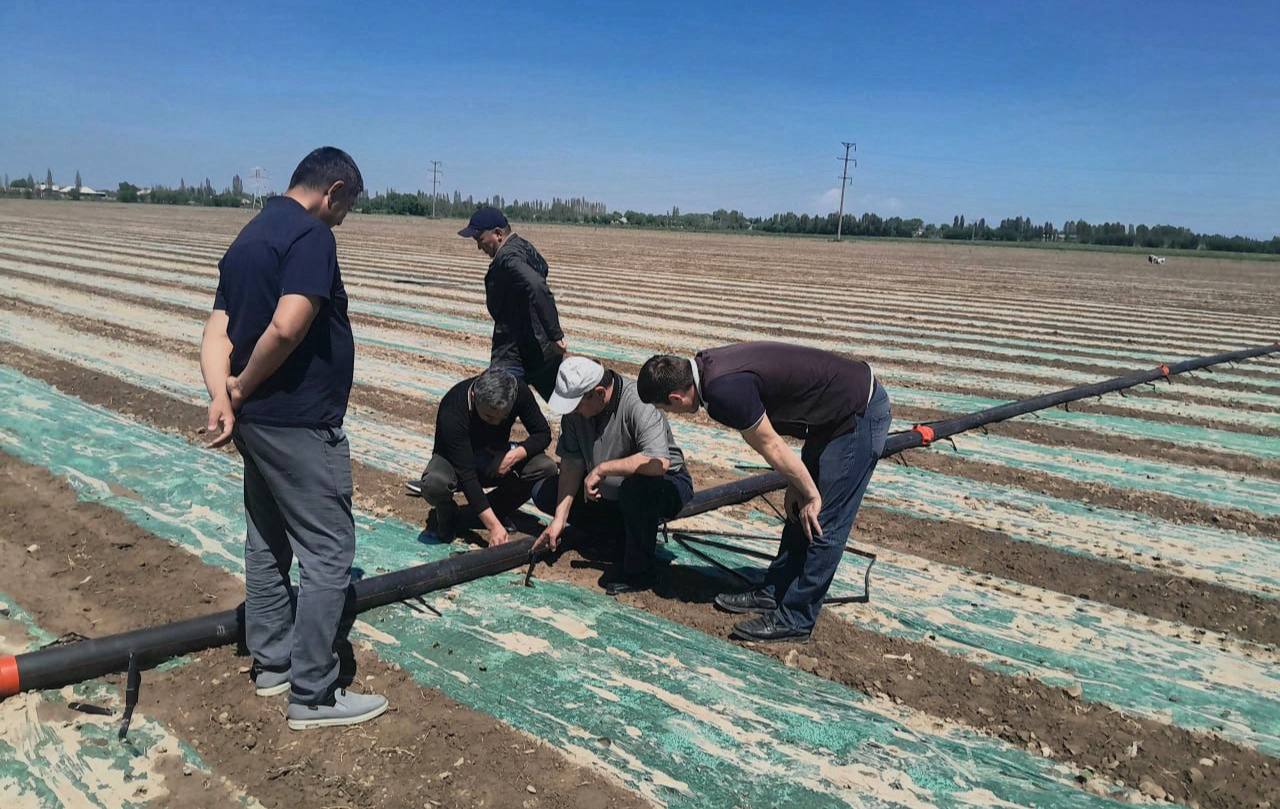
Scientific and technical monitoring activities are being carried out in the districts of Buka, Okkurgon, Bekobod and Tashkent district. In particular, scientific recommendations were provided regarding certain shortcomings in the installation and assembly of water-saving technologies and pipelines.
Within the “Roadmap” aimed at scientific solutions for water management activities in Tashkent region, the following measures across 9 directions are planned for implementation in 2026:
Saving a total of 350.4 million m³ of water through scientifically efficient water management, introduction of water-saving irrigation technologies, and reduction of water losses in canals and irrigation networks;
Of the existing 3,158.7 km of canals, 2,326.5 km are earthen canals; in 2026, a total of 1,252.7 km will be concreted (including 3 km of main and inter-district canals, 69.7 km of internal canals under water supply services, and 1,180 km belonging to farms and clusters);
Introduction of water-saving technologies on 83,000 hectares, including:
9,700 ha drip irrigation,
3,000 ha sprinkler irrigation,
2,200 ha discrete irrigation,
26,700 ha other methods;
Reduction of saline land areas by 1,200 hectares;
Replacement of 60 pump units and electric motors, saving 1.1 million kWh of electricity through the repair of pumping stations;
Installation of 3,550 kW solar panels at pumping stations;
Utilization of $505,000 in investment funds for developing irrigation infrastructure, introducing water-saving technologies, and modernizing pumping stations;
Production of 629 tons of meat through the development of livestock, poultry, fish farming, and other activities on water management facilities and water fund lands.
Additionally, negotiations were held between the scientific advisor and the Chirchik–Ohangaron Basin Irrigation Systems Administration to create necessary conditions for students of the bachelor’s programs “Water Management Melioration” and “Agricultural Mechanization” to undergo internships based on dual education starting from May 1, 2026.